During the 2011 Libyan Revolution a number of archaeological and cultural heritage sites suffered from looting. Most noteworthy was the theft of the Benghazi Treasure, a collection of 7700 gold, silver and bronze coins, jewelry and statuettes, from the main branch of Libya’s commercial bank in Benghazi.
For reports of the joint Association of National Committees of the Blue Shield (ANCBS) and International Military Cultural Resources Work Group (IMCuRWG) Mission to Libya, with links to photo documentation see:
- Civil-Military Assessment Mission for Libyan Heritage by Blue Shield and IMCuRWG – September 2011
- 2nd Civil-Military Assessment Mission for Libyan Heritage – November 2011
- USCBS statement on Libya “Protection of Important Libyan (Libyan Arab Jamahiriya) Cultural Heritage Sites” – March 2011
- Blue Shield statement on Libya – March 2011
Latest News & Alerts
September 25, 2026
On Thursday, September 17, 2026, the U.S. Committee of the Blue Shield co-hosted its annual conference alongside American University Washington College of Law, welcoming conference attendees and 14 esteemed guest speakers at both WCL's Congressional Hall [...]

September 10, 2026
In one week from today, these fantastic speakers and panelists will be joining us at our 20th anniversary conference, in partnership with Washington College of Law's Program on Information Justice and Intellectual Property at American University [...]

August 31, 2026
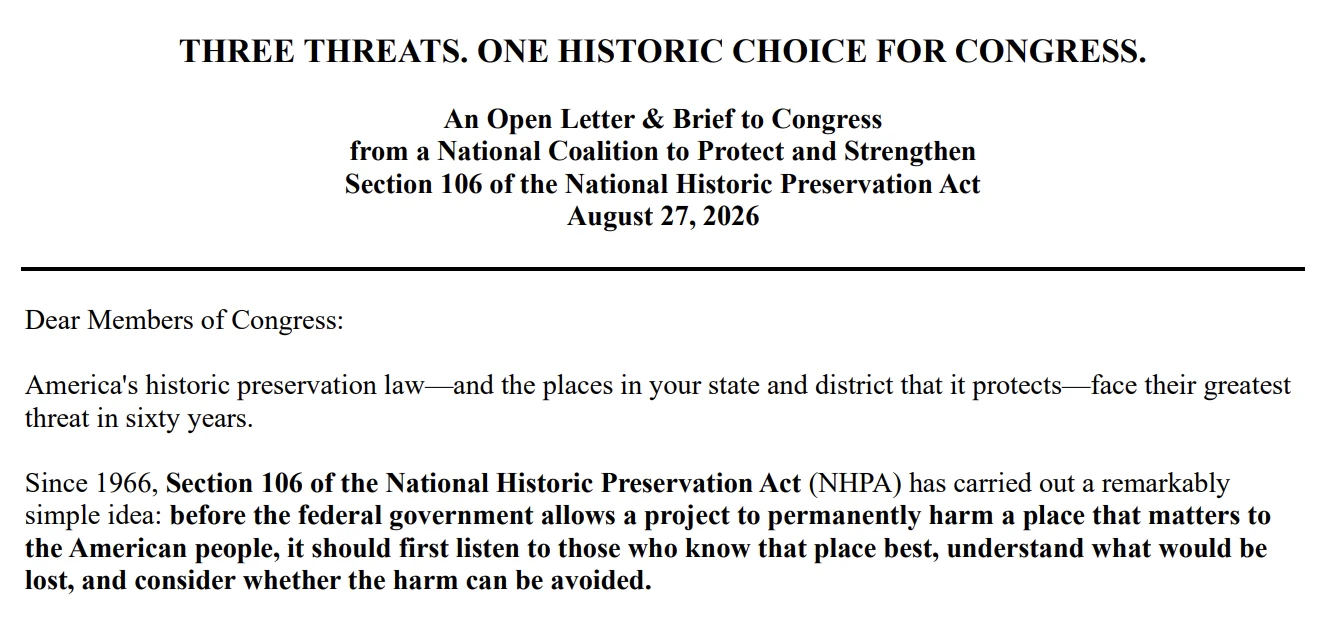
You may have heard the term, “Section 106,” in discussions of U.S. heritage. Perhaps you have seen it in recent headlines. If you’re unfamiliar with this term, “Section 106” refers to a particular part of the [...]